
Industrial sites that handle flammable gases, vapours, combustible dust, or other hazardous materials require careful equipment selection. In these locations, an electrical motor must meet more than ordinary performance requirements. Its design, certification, installation, and maintenance must be appropriate for the identified hazard and the applicable safety standards.
An explosion-protected motor can form part of a wider hazardous-area safety strategy. However, choosing one based only on a product name or enclosure appearance is not sufficient. The complete installation must be assessed by qualified professionals.
Understanding Hazardous-Area Motor Requirements
Hazardous locations are classified according to the type of hazardous substance, the likelihood and duration of its presence, and the applicable regulatory framework. Different regions use different classification systems and certification schemes.
A motor intended for one hazardous-area classification may not be suitable for another. Engineers must establish the site’s classification before selecting equipment and should verify that the motor’s certification covers the intended location.
The hazard assessment should identify whether the risk comes from flammable gas, vapour, combustible dust, or a combination of substances. The characteristics of the material, including ignition properties where relevant, influence the equipment requirements.
How Explosion Protection Works
Explosion-protected equipment is designed and certified according to a specified protection concept. Depending on the design, this may involve containing an internal ignition, preventing ignition-capable conditions, or limiting the likelihood that an ignition source can ignite the surrounding atmosphere.
The exact protection method must be appropriate for the classified area. A motor described generally as “explosion-proof” should not be assumed to meet every hazardous-area requirement.
Certification and marking
The equipment marking and certificate provide important information about the approved application. Buyers should verify the protection method, equipment group, temperature classification, area suitability, and any installation conditions listed in the documentation.
Certification should be valid for the intended jurisdiction and match the exact motor configuration being purchased. Modifications, replacement parts, or unauthorised repairs may affect the original approval.
Temperature classification
Surface temperature is an important consideration where flammable gases, vapours, or dusts may be present. The motor’s temperature classification must be compatible with the hazard assessment and the relevant ignition characteristics.
Engineers should also consider ambient temperature and operating conditions, as these can influence the equipment’s thermal behaviour.
Selecting the Correct Motor Rating
Safety certification does not replace ordinary motor-sizing requirements. The motor must still meet the driven equipment’s electrical and mechanical needs.
Power, torque, and speed
The rated output should match the load under normal and expected operating conditions. Starting torque, acceleration time, speed, and duty cycle should be reviewed alongside the motor’s certified operating limits.
Voltage and frequency
The motor’s electrical rating must match the available supply. The design should also account for permissible voltage variation, starting arrangements, and compatibility with any variable-frequency drive.
If speed control is required in a hazardous location, the motor, drive, sensors, and associated equipment must be suitable for the complete installation. Approval of the motor alone does not automatically approve the drive system.
Cooling and enclosure
The cooling method and enclosure should be appropriate for the site conditions. Dust accumulation, high ambient temperatures, restricted ventilation, and corrosive exposure can affect motor performance and maintenance needs.
Installation Requirements
Correct installation is essential to preserving the equipment’s certified protection. Cable entries, glands, terminal boxes, grounding, and connection methods must comply with the manufacturer’s instructions and applicable standards.
Qualified installation
Personnel should be trained and authorised for the hazardous-area work involved. Installation procedures should address the approved cable-entry system, sealing requirements, fasteners, and any specified installation clearances.
Electrical protection
The protective system should be designed for the motor and electrical network. Overload, short-circuit, earth-fault, and thermal protection may be required according to the installation design. Protection settings should not compromise the motor’s certified operating limits.
Inspection and documentation
Installation records should identify the equipment, certification, location, connection details, and inspection results. Maintaining this documentation makes future maintenance and compliance reviews more reliable.
Maintenance and Inspection
Hazardous-area equipment requires maintenance that preserves both its operational condition and its approved protection features. Inspection schedules should follow the applicable standard, site risk assessment, and manufacturer’s recommendations.
Maintenance personnel should check for signs of overheating, vibration, corrosion, damaged cables, loose connections, and enclosure deterioration. Any repair that could affect certified features should be completed by appropriately qualified personnel using approved procedures and parts.
Records of inspections, repairs, and replacement components help establish a clear history of the equipment. If a motor’s protection integrity is uncertain, it should not be returned to service until the issue has been assessed and resolved.
See also: Finding a Reliable Logitech Shop Hong Kong Buyers Can Trust
Supplier Assessment and Procurement
Purchasers should provide the supplier with the hazardous-area classification, applicable certification requirements, rated power, voltage, frequency, speed, duty, mounting, cooling, and site conditions.
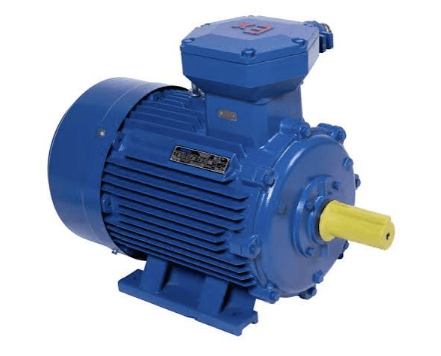
They should request the certificate, equipment marking details, datasheet, dimensional drawings, installation instructions, and maintenance documentation. Product information for motorxc explosion proof ac motor can be reviewed during the sourcing process. The exact model’s certification and suitability must be confirmed directly before purchase.
Frequently Asked Questions
1. Can any explosion-protected motor be used in every hazardous area?
No. Suitability depends on the hazardous substance, area classification, protection method, temperature requirements, certification, and installation conditions.
2. Does a certified motor make the whole installation safe?
No. The complete installation must be assessed, including electrical connections, cable entries, protection equipment, control systems, and maintenance procedures.
3. Who should install and maintain these motors?
Qualified personnel with the appropriate hazardous-area training and authorisation should perform the work according to the applicable standards and manufacturer’s instructions.
Conclusion
Selecting an explosion-protected AC motor requires a verified hazardous-area assessment, suitable certification, correct motor sizing, and careful installation planning. Ongoing inspection and qualified maintenance help preserve both safety and reliability. Buyers should verify the exact motor configuration and documentation rather than relying on a general product description.