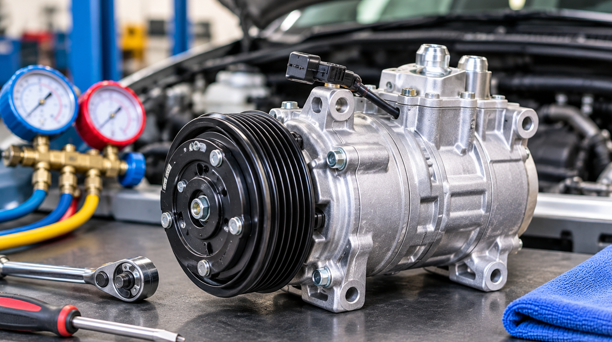

A properly functioning air conditioning system makes daily driving more comfortable, particularly during hot weather and long journeys. One of its most important mechanical components is the automotive air conditioning compressors assembly, which circulates refrigerant and helps remove heat from the vehicle cabin. Understanding its operation, recognising early signs of failure and following suitable maintenance practices can help vehicle owners avoid expensive repairs and maintain consistent cooling performance.
How Does a Car Air Conditioning Compressor Work?
The compressor circulates refrigerant through a closed air conditioning system. It draws in low-pressure refrigerant gas from the evaporator, compresses it and sends it towards the condenser as a high-pressure, high-temperature gas.
The condenser then releases heat into the outside air, allowing the refrigerant to change into a liquid. It passes through a receiver-drier or accumulator and an expansion valve before reaching the evaporator. Inside the evaporator, the refrigerant absorbs heat from the cabin air. The blower fan then pushes cooled air through the vehicle’s ventilation outlets.
This cycle continues while the air conditioning system operates. Any problem affecting refrigerant circulation, pressure or heat transfer can reduce cooling performance.
Main Components That Support Compressor Operation
The compressor works alongside several other parts. Each component has a specific function, and a fault elsewhere in the system can affect its performance.
- Condenser: Releases heat from the refrigerant and helps convert it from gas into liquid.
- Evaporator: Absorbs heat from the air inside the vehicle.
- Expansion valve: Regulates refrigerant flow into the evaporator.
- Receiver-drier: Removes moisture and contaminants from the refrigerant.
- Cooling fan: Helps move air across the condenser to release heat.
- Drive belt and pulley: Transfer mechanical power to belt-driven compressors.
A fault in any of these components may produce symptoms similar to compressor failure. Proper inspection helps identify the actual source of the problem.
Common Signs of a Failing Compressor
Compressor problems often develop gradually. Drivers may notice changes in cooling performance before the component stops working completely. Recognising these warning signs can help prevent additional damage.
1. Warm air from the vents
One of the most noticeable symptoms is warm or insufficiently cooled air. A damaged compressor may struggle to circulate refrigerant at the required pressure. However, low refrigerant levels, condenser problems and electrical faults can produce similar symptoms.
2. Unusual noises during operation
Grinding, rattling, squealing or clicking sounds near the compressor may indicate worn bearings, pulley problems or internal mechanical damage. These noises should be investigated before the condition becomes worse.
3. Intermittent cooling
Air conditioning that works for a few minutes and then starts blowing warm air may indicate a control valve issue, pressure irregularity, electrical fault or overheating component. A technician should inspect the entire system rather than assume the compressor needs replacement.
4. Refrigerant or oil leakage
Visible oily residue around compressor connections, seals or housing may indicate a leak. Refrigerant loss reduces cooling capacity and can affect compressor lubrication.
5. Increased engine load
A compressor with mechanical resistance can place additional load on the engine. Drivers may notice unusual engine behaviour when the air conditioning is switched on, although other engine or belt-related faults can produce similar effects.
What Causes Compressor Failure?
Several mechanical, electrical and maintenance-related issues can shorten compressor service life.
- Insufficient lubrication: Incorrect oil quantity or unsuitable oil can increase friction and internal wear.
- Refrigerant leakage: Low refrigerant levels can interfere with system operation and affect compressor lubrication.
- Contamination: Metal particles, moisture and debris can damage internal surfaces and restrict refrigerant flow.
- Electrical problems: Faulty wiring, relays, sensors or control valves can prevent proper compressor operation.
- Worn drive components: Damaged belts, pulleys and tensioners can affect power transmission.
- Excessive operating pressure: Restricted airflow across the condenser or other system faults can increase operating pressure.
Finding the original cause of failure is essential. Installing a replacement without addressing contamination, incorrect lubrication or another underlying fault may lead to another breakdown.
Choosing the Right Compressor for Your Vehicle
Selecting the correct replacement requires more than matching the vehicle’s make and model. Engine specifications, manufacturing year, refrigerant type, mounting arrangements and electrical connections can all affect compatibility.
An automotive air conditioner compressor must meet the manufacturer’s specifications for the particular vehicle. Buyers should also check the compressor’s displacement, pulley arrangement, mounting points and control system.
A standard ac compressor may look similar to another unit but still have different technical specifications. Comparing original equipment numbers and approved replacement references helps reduce compatibility problems.
For vehicles with different cooling system designs, a vehicle ac compressor should be selected according to its intended application. Hybrid and electric vehicles may also require electrically driven compressors rather than conventional belt-driven units.
A suitable AC air compressor for car applications should match the refrigerant and lubricant requirements specified by the manufacturer. Using an incorrect combination can affect cooling efficiency and component reliability.
The term auto AC compressor is also used for replacement units across passenger cars, SUVs and commercial vehicles. Buyers should consider manufacturing quality, warranty coverage, supplier reliability and the availability of technical support before making a purchase.
Maintenance Practices That Help Extend Compressor Life
Regular servicing can identify problems before they develop into expensive repairs. A few practical maintenance measures can help preserve the air conditioning system.
Schedule periodic inspections: Have refrigerant pressure, cooling performance, electrical connections and system components checked at suitable service intervals.
Check for refrigerant leaks: A sealed air conditioning system should not require frequent refrigerant refilling. Repeated loss usually indicates a leak that needs investigation.
Use the specified compressor oil: Lubricant type and quantity must follow the vehicle and compressor manufacturer’s instructions. Different compressor designs may require different oils.
Keep the condenser clean: Dirt, leaves and road debris can restrict airflow and reduce heat dissipation. Regular cleaning helps maintain effective cooling.
Replace related components when required: Depending on the extent of a compressor failure, the receiver-drier, expansion valve and other contaminated components may require inspection or replacement.
Operate the air conditioning system periodically: Using the system at suitable intervals can help maintain circulation and lubrication. Follow the manufacturer’s recommendations, particularly for vehicles with electric compressors.
When Should You Repair or Replace the Compressor?
The decision depends on the nature and extent of the damage. Minor problems involving electrical connections, control valves or external components may be repairable without replacing the complete compressor.
Internal mechanical damage, severe contamination or significant leakage from the compressor housing may make replacement the more practical option.
Before approving the work, ask the technician to carry out a complete system assessment. This should include pressure testing, leak detection, electrical checks and an inspection for metal debris or moisture. The refrigerant should also be recovered and recharged using suitable equipment and the specified quantity.
After installation, the technician should follow the manufacturer’s procedures for oil balancing, evacuation, refrigerant charging and operational testing. These steps help confirm that the replacement unit works correctly with the rest of the system.
Reliable Cooling Starts With Proper System Care
A well-maintained air conditioning system depends on correct component selection, suitable lubrication and timely diagnosis. Paying attention to unusual noises, reduced cooling and refrigerant leaks can help vehicle owners address faults before they affect other parts.
For repair workshops, automotive parts suppliers and vehicle owners, understanding compressor specifications and maintenance requirements makes replacement decisions more reliable. Professional inspection, quality replacement parts and manufacturer-approved servicing procedures can help maintain dependable cabin cooling over the vehicle’s service life.