
Commercial spaces rely on properly installed equipment, furniture, fixtures and operational systems. From retail stores and offices to warehouses and hospitality facilities, every installation project requires careful planning, accurate measurements and skilled handling. Choosing professional commercial installation services can help businesses avoid costly installation errors, reduce workplace disruption and prepare their premises for daily operations. Understanding the installation process, available service options and factors that affect project quality helps business owners make informed decisions before work begins.
Why Commercial Installations Require Professional Planning
Commercial installation projects often involve more than placing equipment or assembling furniture. They may require coordination between suppliers, contractors, facility managers and installation teams. Each party has specific responsibilities, and poor coordination can lead to delays, incorrect fittings or additional expenses.
For example, installing workstations in an office requires attention to floor layouts, electrical outlets, cable management and employee movement. A retail store installation may involve display units, shelving, counters and customer-facing fixtures. Warehouses have different requirements, including storage racks, workstations and equipment positioning.
Professional planning helps address these requirements before installation begins. A detailed assessment allows the installation team to identify potential challenges, confirm measurements and determine the tools and resources needed for the project.
Types of Commercial Installation Projects
Commercial properties contain different fixtures and equipment depending on their purpose. Installation requirements can vary considerably between industries.
Some common project categories include:
- Office furniture: Desks, conference tables, partitions, storage cabinets and ergonomic workstations.
- Retail fixtures: Display shelves, checkout counters, product racks, signage and merchandising units.
- Hospitality equipment: Reception desks, restaurant furniture, storage systems and service counters.
- Warehouse installations: Industrial shelving, pallet racks, workbenches and material-handling equipment.
- Commercial appliances: Kitchen equipment, refrigeration units and other business-related appliances.
- Technology equipment: Office technology stations, audiovisual systems and compatible mounting equipment.
Each category requires different installation techniques. Heavy fixtures may need specialised lifting equipment, while modular furniture often requires precise alignment and secure connections.
How Commercial Assembly Services Support Business Operations
Many commercial products arrive in separate components that must be assembled before they can be used. This can include office furniture, retail shelving, storage units and modular workstations.
Professional commercial assembly services help businesses manage these tasks without assigning installation responsibilities to employees who may lack the necessary training or equipment.
An experienced assembly team typically follows the manufacturer’s instructions, checks individual components and uses suitable tools to complete the work. They also inspect connections, fasteners and structural stability before handing over the assembled products.
Proper assembly can prevent several common problems:
- Loose connections that affect product stability.
- Misaligned furniture components.
- Incorrectly fitted drawers, doors or shelves.
- Damage caused by unsuitable tools.
- Missing components that go unnoticed during assembly.
For businesses handling multiple units, organised assembly also helps maintain consistency. For example, a company furnishing several office locations may need identical workstation layouts, furniture configurations and storage arrangements. A coordinated team can follow standard specifications across different sites.
What Businesses Should Expect During an Installation Project
A well-organised installation project usually follows several stages. Understanding these steps helps business owners prepare their premises and communicate their requirements clearly.
1. Initial Site Assessment
The process begins with an inspection of the installation location. The team reviews available space, access points, floor conditions and any restrictions that could affect the work.
Measurements are particularly important for large furniture pieces, display units and commercial equipment. Checking doorways, lifts, corridors and loading areas also helps prevent delivery complications.
2. Scheduling and Preparation
Installation work must fit around the business’s operating schedule. Some companies prefer weekend or after-hours installations to avoid interrupting employees and customers.
Before work begins, businesses should confirm delivery dates, product quantities, site access and any building management requirements.
3. Installation and Assembly
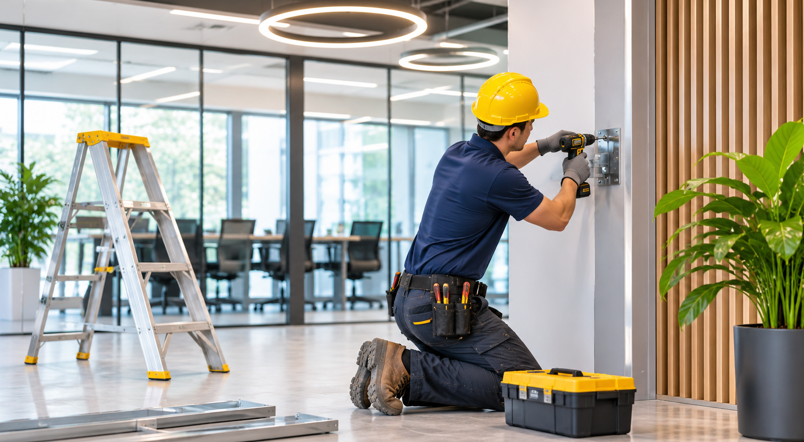
The installation team follows the approved layout and product specifications. Depending on the project, this may involve assembling individual components, securing fixtures, positioning equipment or completing mounting work.
Workers should use appropriate tools and follow relevant manufacturer instructions. Any electrical, plumbing or other regulated work should be handled by appropriately qualified professionals.
4. Inspection and Handover
The final stage involves checking the completed installation. Teams should confirm that fixtures are stable, components are properly secured and equipment is positioned according to the agreed layout.
A clear handover gives the business an opportunity to identify outstanding issues before the project is considered complete.
Finding Commercial Installation Services Canada Businesses Can Rely On
Businesses operating across different Canadian cities may face logistical challenges when arranging installations. Multi-location retailers, franchise operators and expanding office networks often need consistent installation standards across several properties.
Searching for commercial installation services in Canada requires more than comparing quoted prices. Businesses should assess the provider’s experience with similar projects, geographical coverage, workforce capacity and ability to meet installation schedules.
Several considerations can help narrow down suitable providers:
Regional coverage: Confirm that the provider can service all required locations, particularly when installations involve multiple cities or provinces.
Project experience: Ask whether the team has completed comparable installations in retail, office, hospitality or industrial environments.
Scheduling capacity: Large projects may require several installation teams working within specific timeframes. Confirm that the provider can meet the proposed schedule.
Insurance and qualifications: Check that the provider maintains appropriate insurance and uses qualified personnel for specialist work.
Communication: A reliable provider should explain project requirements, identify potential obstacles and provide clear updates throughout the installation process.
Businesses with recurring installation requirements may also benefit from working with a provider that can maintain consistent procedures across different sites.
Common Problems That Can Affect Installation Quality
Even straightforward projects can encounter difficulties if important details are overlooked. Identifying common risks early helps businesses avoid unnecessary expenses.
Inaccurate Measurements
Incorrect measurements can prevent furniture and fixtures from fitting properly. This problem is particularly common with large display units, office partitions and built-in storage systems.
Taking accurate measurements before ordering products can reduce the risk of adjustments or replacements.
Poor Site Preparation
Installation areas should be cleared before the team arrives. Existing furniture, packaging materials and unnecessary equipment can restrict movement and slow down the work.
Businesses should also identify areas where temporary access restrictions may be necessary.
Inadequate Product Inspection
Damaged or incomplete products can delay installation. Checking deliveries against purchase orders and reporting missing components promptly gives suppliers more time to resolve problems.
Unclear Installation Instructions
Complex products may require specific assembly sequences, mounting methods or safety procedures. Teams should have access to the correct product documentation before starting work.
What to Look for in a Commercial Product Installation Service
Selecting a commercial product installation service requires an assessment of both technical ability and project management. A provider may be experienced in furniture assembly but lack the equipment or qualifications needed for specialised commercial installations.
Businesses should consider the following factors:
- Relevant experience: Look for previous work involving similar products and commercial environments.
- Workforce training: Installation personnel should understand safe handling procedures and manufacturer specifications.
- Equipment availability: Confirm that the team has suitable tools, lifting equipment and protective materials.
- Project coordination: The provider should be able to manage deliveries, installation schedules and site requirements.
- Quality checks: Ask how completed work is inspected and how installation issues are reported.
- Service documentation: Written quotations, project scopes and completion records help establish clear expectations.
It is also useful to request references or examples of previous projects. These can provide a better understanding of the provider’s working methods and ability to handle projects of a similar scale.
Managing Installation Costs Without Sacrificing Quality
Installation costs depend on several factors, including product size, project complexity, location, labour requirements and the number of units involved.
A single furniture assembly job will generally require fewer resources than fitting out an entire commercial property. Projects involving heavy equipment, restricted access or specialist mounting work may also require additional labour and preparation.
Businesses can manage expenses through practical planning:
- Prepare an accurate inventory of all products requiring installation.
- Share floor plans, measurements and site photographs before requesting quotations.
- Confirm whether delivery, packaging removal and disposal are included.
- Coordinate installation dates to reduce repeated site visits.
- Discuss additional charges for unexpected work before the project begins.
Comparing quotations based on the same scope of work makes it easier to understand differences in pricing. The lowest quotation may not offer the best value if essential services, inspection or project coordination are excluded.
Preparing Your Business for a Successful Installation
A successful installation depends on cooperation between the business, supplier and installation team. Businesses should appoint a contact person who can answer questions, approve layouts and address unexpected site issues.
Access arrangements should be confirmed in advance, particularly for buildings with loading restrictions, security procedures or limited operating hours. Employees should also be informed about temporary changes to workspace access or daily operations.
For larger projects, maintaining a written installation schedule can help track deliveries, completed areas and outstanding tasks. This is especially useful when several departments or commercial locations are involved.
Careful preparation gives installation teams the information and working conditions needed to complete their responsibilities efficiently. It also helps businesses receive finished spaces that are organised, functional and ready for use.
A well-managed installation project should leave the business with more than assembled products. Proper positioning, secure fittings, consistent layouts and documented inspections all contribute to a workplace that supports everyday operations. Businesses that evaluate providers carefully and prepare their premises before work begins are better positioned to control costs, avoid delays and maintain installation quality.