
Water damage can affect a property in a matter of minutes, but the problems it creates may continue for weeks if the affected areas are not treated properly. Burst pipes, leaking appliances, roof damage, flooding and drainage issues can allow moisture to spread behind walls, beneath flooring and into structural materials. Professional restoration water damage services help property owners identify the source, remove standing water, dry affected areas and repair damaged materials. Understanding each stage of the process can help homeowners and business owners make informed decisions, reduce repair costs and prevent further deterioration.
What Happens When Water Enters a Property?
Water does not always remain in the area where it first appears. It can travel through wall cavities, floor joints, insulation and ceiling spaces. Materials such as plasterboard, timber, carpets and upholstery absorb moisture, sometimes without showing obvious signs of damage.
The longer these materials remain wet, the greater the risk of structural deterioration and microbial growth. Moisture trapped inside enclosed spaces can also create unpleasant odours and affect indoor air quality.
Common causes of indoor water damage include:
- Burst or leaking pipes: Damaged plumbing connections can release large amounts of water into walls, floors and ceilings.
- Appliance failures: Washing machines, dishwashers and water heaters can leak because of worn components or faulty connections.
- Roof leaks: Damaged shingles, flashing or roof joints allow rainwater to enter the building.
- Storm flooding: Heavy rainfall and overflowing drainage systems can introduce contaminated water into properties.
- Blocked drains: Drainage problems may cause wastewater to back up into bathrooms, kitchens and utility areas.
Identifying the source is essential because drying the property without fixing the underlying problem can lead to repeated damage.
How Professional Restoration Water Damage Services Work
A successful restoration project follows a structured process. Each stage addresses a different part of the damage, from the initial water intrusion to the final repairs.
1. Property Inspection and Damage Assessment
The first step involves inspecting the affected property to determine how far the water has spread. Restoration technicians examine visible damage and use moisture meters or thermal imaging equipment to identify hidden damp areas.
They also assess the type of water involved. Clean water from a supply pipe presents different risks from water containing sewage, chemicals or outdoor contaminants.
An accurate assessment helps establish which materials can be dried and which need replacement.
2. Water Extraction
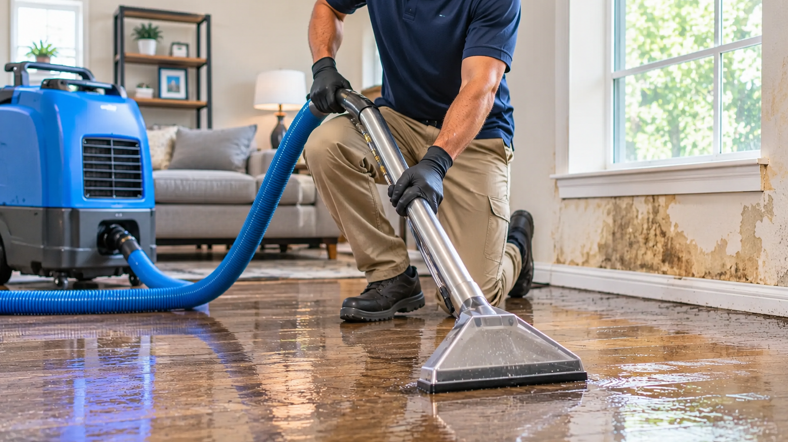
Standing water must be removed before the drying process can begin. Technicians may use industrial pumps, wet vacuums and specialised extraction equipment, depending on the amount of water present.
Fast extraction helps limit the time that floors, carpets, furniture and structural materials remain exposed to moisture.
3. Structural Drying and Dehumidification
Removing visible water does not mean the property is completely dry. Moisture can remain inside timber framing, concrete, insulation and wall cavities.
Air movers circulate air across damp surfaces, while commercial dehumidifiers remove moisture from the surrounding environment. Technicians monitor moisture levels throughout the process to determine when materials have reached suitable drying conditions.
4. Cleaning and Sanitisation
Floodwater and sewage-contaminated water may introduce bacteria, debris and other harmful substances. Affected surfaces require suitable cleaning and sanitisation procedures.
Some porous materials, including heavily contaminated carpets and insulation, may need to be removed rather than cleaned. Proper handling and disposal reduce the risk of contamination spreading to unaffected areas.
5. Repairs and Reconstruction
Once the property has been dried and assessed, repair work can begin. This may involve replacing plasterboard, repairing flooring, repainting walls, restoring cabinets or addressing damaged electrical and plumbing components.
A final inspection helps confirm that moisture problems have been addressed before reconstruction is completed.
Why Early Repairs Matter
Delaying restoration work can increase the extent and cost of property damage. Water can weaken building materials, damage electrical systems and create conditions that support mould growth.
Early intervention offers several practical benefits:
- Limits structural deterioration: Removing moisture reduces prolonged exposure to timber, plasterboard and other building materials.
- Reduces secondary damage: Prompt drying can prevent water from spreading into additional rooms and building components.
- Protects indoor conditions: Proper cleaning and drying help address contamination and moisture-related odours.
- Supports insurance documentation: Inspection reports, photographs and repair records can help property owners provide evidence when submitting an insurance claim.
- Reduces unnecessary replacement: Materials that are still structurally sound may be salvageable when treated promptly.
Property owners should avoid switching on electrical equipment in flooded areas. If water has reached electrical outlets, appliances or wiring, a qualified electrician should inspect the affected systems before they are used again.
Choosing a Reliable Water Damage Restoration Provider
Selecting the right service provider can influence the quality and duration of the restoration project. A dependable water damage restoration company should have trained technicians, appropriate equipment and a clear process for assessing and repairing different types of water damage.
Before hiring a provider, consider the following factors:
Emergency response: Water damage can worsen quickly. Ask about emergency availability and expected response times.
Technical equipment: Professional extraction machines, air movers, dehumidifiers and moisture detection tools are essential for thorough drying.
Experience with different properties: Residential buildings, offices, retail spaces and industrial facilities may require different restoration methods.
Clear estimates: Request a written breakdown covering inspection, extraction, drying, cleaning and reconstruction costs.
Documentation: A professional provider should be able to explain the work completed and supply relevant moisture readings, photographs and service records.
Property owners should also check whether the company carries appropriate insurance and follows recognised safety procedures.
Understanding Water Damage Repair and Restoration Costs
The cost of restoration depends on several factors. A small leak affecting one room may require limited extraction and drying, while extensive flooding can involve multiple rooms, structural repairs and specialist cleaning.
The main cost considerations include:
- The size of the affected area.
- The amount and category of water involved.
- The type of materials that need drying or replacement.
- The time required for extraction and dehumidification.
- The need for mould remediation or specialist cleaning.
- Labour, equipment and reconstruction requirements.
Professional water damage repair services should provide an assessment before major work begins. Property owners can request itemised estimates to understand which tasks are necessary and how the costs have been calculated.
Insurance coverage varies according to the policy and the cause of damage. Sudden pipe failures may be covered under some policies, while gradual leaks, maintenance issues or certain flood events may be excluded. Reviewing the policy and contacting the insurer promptly can help clarify the available coverage.
Special Considerations for Houston Properties
Houston properties face particular water damage risks because of heavy rainfall, tropical storms, high humidity and drainage challenges. Flooding can affect ground floors, basements, garages and commercial spaces, while persistent humidity can slow the natural drying of building materials.
Property owners searching for a restoration company in Houston should look for providers familiar with local weather conditions, common building materials and regional flood risks.
A local provider may also be better positioned to assess storm-related damage and coordinate emergency services during periods of heavy rainfall.
For residents comparing water damage restoration to Houston TX providers, it is useful to check their emergency response arrangements, equipment capacity and experience with floodwater contamination. These factors can influence how effectively a property is restored after severe weather.
Businesses should also consider the effect of water damage on stock, equipment, customer access and daily operations. A restoration plan that prioritises safety and essential areas can help reduce disruption.
Steps Property Owners Can Take Before Help Arrives
Professional restoration requires specialist equipment, but property owners can take several precautions while waiting for assistance.
- Stop the water supply if the damage comes from a plumbing leak and it is safe to do so.
- Move furniture, documents and valuables away from affected areas if they can be handled safely.
- Avoid walking through contaminated floodwater.
- Keep children and pets away from wet or potentially unsafe spaces.
- Photograph visible damage for insurance records.
- Arrange an electrical inspection if water has reached wiring, outlets or appliances.
- Contact a qualified restoration provider for an assessment.
Do not use household fans or electrical appliances in areas where standing water creates an electrical hazard. Contaminated water should also be left to trained professionals.
Final Considerations
Water damage requires more than removing visible puddles and replacing damaged flooring. Hidden moisture, contaminated materials and weakened structural components can create problems long after the initial incident.
A properly managed restoration project combines inspection, extraction, controlled drying, cleaning and necessary repairs. Property owners in Houston can also benefit from choosing a water damage restoration company in Houston with local experience and the resources to respond to different types of property damage.
Taking prompt action, keeping accurate records and arranging professional assessments can help protect the building, control repair expenses and make the recovery process more manageable.