
Why Is Controlled Drying Important for Seeds and Moisture-Sensitive Products?
Maintaining the right moisture level is one of the most important factors in preserving seed quality and ensuring better storage conditions. Seeds contain natural moisture, and improper drying can affect their stability, longevity, and overall performance during storage.
Traditional drying methods often depend on environmental conditions and uncontrolled airflow, which can create challenges in achieving consistent moisture removal. Modern industrial drying solutions focus on controlling humidity, airflow, and temperature to create a reliable drying environment.
Bry-Air specialises in humidity control and drying technologies designed for industries that require precise moisture management. Their solutions use desiccant dehumidification technology to provide controlled drying conditions for seeds, agro products, and other moisture-sensitive materials.
A properly designed seed drying tray helps create an organised drying process by allowing controlled air circulation around the product. This supports uniform moisture removal while helping maintain the quality of seeds during the drying cycle.
What Role Does Moisture Control Play in Seed Preservation?
Maintaining the Right Moisture Balance
Moisture content directly influences the storage life and quality of seeds. Excess moisture can create unsuitable storage conditions, while improper drying methods may affect the characteristics of the product.
A controlled drying system helps reduce moisture levels gradually and efficiently. By managing the humidity of the drying air, industries can achieve better consistency compared with conventional drying approaches.
Desiccant dehumidification technology works by reducing moisture from the air before it enters the drying chamber. The dry air then absorbs moisture from the product, improving the drying potential while maintaining controlled conditions.
See also: Power Plant Turbine: Essential Maintenance Practices for Reliable Power Generation
Improving Drying Consistency
One of the major challenges in industrial drying is achieving uniform results across the entire batch. Uneven airflow, inconsistent temperatures, and changing environmental conditions can impact drying performance.
Advanced drying systems are designed to provide balanced airflow distribution throughout the drying chamber. This helps ensure that materials placed on different trays receive consistent exposure to dry air.
Bry-Air tray drying solutions are designed with controlled air distribution patterns to improve drying efficiency and support uniform moisture removal.
How Does a Tray Dryer Work for Industrial Applications?
Understanding the Drying Process
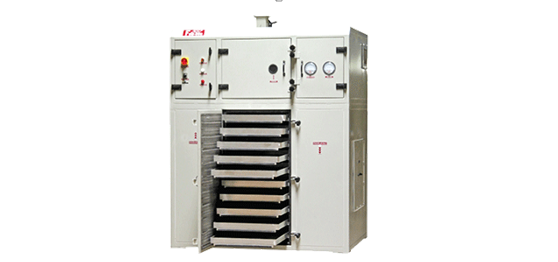
A tray dryer is designed to remove moisture from products placed on multiple trays inside a controlled chamber. The drying process uses circulating air that passes through the product, absorbs moisture, and removes it from the drying environment.
In desiccant-based systems, moisture is removed from the air before it enters the drying chamber. This creates low-humidity air with higher moisture absorption capacity, allowing the drying process to work efficiently without depending only on high temperatures.
Bry-Air tray dryers combine a drying chamber with a desiccant dehumidification system that continuously supplies dry air. This approach helps maintain stable drying conditions for applications requiring precise moisture control.
Features That Support Efficient Drying Performance
Industrial drying equipment needs to provide reliability, operational control, and efficient moisture removal. Important features include airflow management, safety controls, durable construction, and easy maintenance.
A well-designed drying system should provide:
- Consistent airflow distribution
- Controlled humidity levels
- Reliable temperature management
- Efficient moisture removal
- Easy operation and maintenance
These features help industries achieve predictable drying performance while reducing challenges related to moisture variation.
What Are the Benefits of Using a Tray Dryer for Seed Drying?
Better Control Over Drying Conditions
A major advantage of using industrial drying equipment is the ability to control the environment during the drying process. Humidity and airflow can be adjusted according to the requirements of the product.
This level of control allows industries to maintain consistent drying conditions regardless of external environmental changes.
For seed applications, controlled drying is particularly important because maintaining suitable moisture levels supports better preservation and storage management.
Reduced Risk of Moisture-Related Problems
Uncontrolled moisture can create several challenges during storage and processing. A reliable drying system helps remove excess moisture and reduces the possibility of moisture regain.
By using controlled dry air, tray drying systems help create stable conditions where products can reach the required moisture level more effectively.
Bry-Air uses desiccant dehumidification technology in its drying solutions to support applications where maintaining product quality and moisture control are essential.
Improved Energy Efficiency
Modern drying systems are designed to improve efficiency by increasing the drying potential of air instead of relying only on higher temperatures.
Desiccant dehumidification technology removes moisture from the air through adsorption, creating favourable conditions for drying. This approach can help reduce drying challenges for products that require careful temperature management.
How Should Businesses Select the Right Drying Solution?
Evaluate Product Requirements
Choosing the right drying system requires understanding the characteristics of the material being processed. Factors such as moisture content, final moisture requirement, drying capacity, and temperature sensitivity should be considered.
Different products may require different drying conditions, so selecting equipment based on specific process requirements is essential.
Consider Drying Capacity and System Design
Industrial drying requirements vary depending on production volume and operational needs. Businesses should evaluate airflow capacity, available installation space, operating conditions, and maintenance requirements before selecting a system.
A suitable drying solution should provide consistent performance while supporting long-term operational efficiency.
Bry-Air tray dryers are designed for industrial drying applications involving seeds and agro products. They are available in different capacities to meet different processing requirements.
Why Is Bry-Air a Reliable Choice for Industrial Drying Solutions?
Bry-Air has expertise in humidity control, dehumidification, and industrial drying technologies. The company develops solutions for industries where moisture management plays an important role in maintaining process efficiency and product quality.
Their drying systems combine advanced desiccant technology with controlled airflow principles to provide reliable moisture removal.
With a focus on engineering-driven solutions, Bry-Air supports industries looking for effective drying systems that provide consistency, operational control, and improved product handling.
Conclusion
Effective moisture management is essential for maintaining seed quality and achieving reliable drying results. A controlled drying environment helps industries improve consistency, manage moisture levels, and protect products during storage.
A modern tray dryer provides controlled airflow and humidity management through advanced drying technology. This makes it suitable for applications where precise moisture removal and product preservation are required.
Businesses looking for expert guidance on industrial drying and humidity control solutions can connect with Bry-Air through the Contact Us page to discuss their specific requirements.