
A power generation facility depends on several interconnected systems to maintain a consistent electricity supply. Among these, turbine performance directly affects plant output, fuel efficiency and operational stability. A well-maintained power plant turbine can support reliable generation for years, but its performance depends on careful monitoring, timely repairs and sound engineering decisions. Understanding how turbines operate, what causes equipment deterioration and which maintenance practices prevent unexpected failures can help plant operators manage operating costs and protect critical assets.
How Turbines Support Electricity Generation
Turbines convert energy from moving steam, gas or water into mechanical energy. This mechanical movement drives a generator, which produces electricity through electromagnetic induction.
The type of turbine installed depends on the plant’s energy source and design.
- Steam turbines: These use high-pressure steam produced by boilers or heat recovery systems. Steam expands through stationary and rotating blades, turning the turbine shaft.
- Gas turbines: These operate by burning fuel in compressed air. The resulting hot gases expand through turbine stages and generate rotational force.
- Hydro turbines: These use flowing or falling water to rotate runner blades and drive generators.
Each design has different operating conditions, maintenance requirements and performance limitations. Plant engineers must understand these differences before developing inspection schedules or planning equipment upgrades.
Components That Determine Turbine Performance
A turbine contains several precision-engineered components that must operate within specified tolerances. Damage to one component can affect the performance of the entire machine.
Rotor and shaft assembly
The rotor transfers rotational energy to the generator. Shaft alignment, balance and bearing condition must remain within acceptable limits. Excessive vibration can indicate imbalance, misalignment or developing mechanical damage.
Turbine blades
Blades experience high temperatures, pressure changes and mechanical stress. Steam turbines may suffer erosion, corrosion and deposits, while gas turbine blades face oxidation, thermal fatigue and creep.
Bearings and lubrication systems
Bearings support the rotating shaft and maintain its position during operation. Lubrication reduces friction, controls temperature and limits surface wear. Contaminated oil or inadequate lubrication can cause serious equipment damage.
Seals and control valves
Seals help control internal leakage, while valves regulate steam or gas flow. Worn seals can reduce efficiency, and malfunctioning control valves may affect load response and operating stability.
Casing and internal passages
The casing contains the working fluid and maintains the required pressure conditions. Cracks, distortion or damaged internal surfaces can compromise equipment performance.
Maintenance Practices That Reduce Turbine Failures
Turbine maintenance requires more than repairing equipment after a breakdown. A planned programme helps identify developing faults before they cause extensive damage or prolonged outages.
1. Monitor Vibration and Mechanical Movement
Vibration analysis provides useful information about rotating machinery. Changes in vibration levels may indicate rotor imbalance, bearing deterioration, shaft misalignment or looseness in mechanical connections.
Engineers should establish baseline readings and compare them with measurements collected during normal operation. Monitoring trends over time makes it easier to identify abnormal behaviour and investigate potential faults before they become severe.
2. Inspect Blades and Internal Surfaces
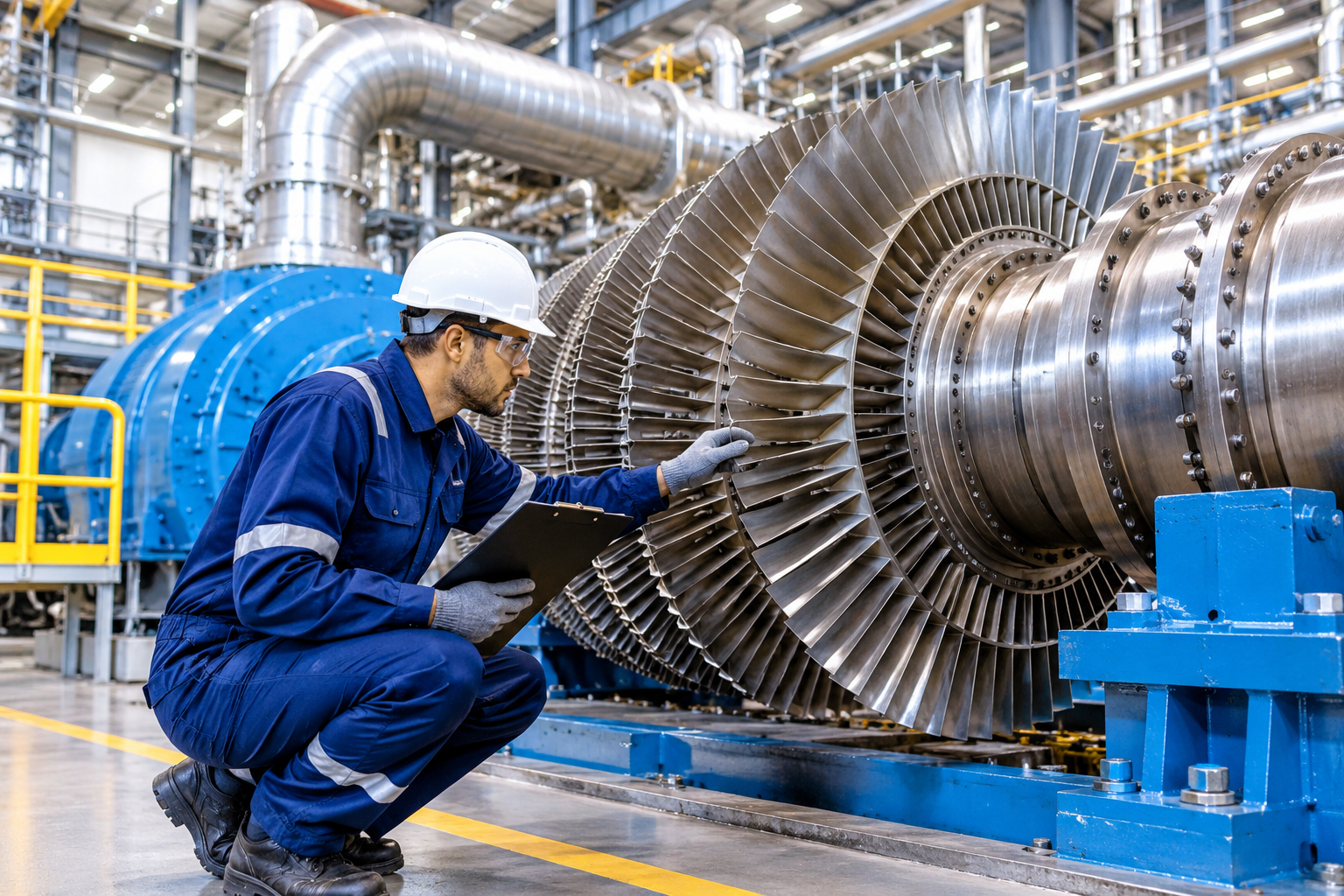
Blade inspections help identify cracks, erosion, corrosion and material deformation. Borescope examinations can provide access to internal sections without requiring complete equipment dismantling.
During scheduled outages, more detailed inspections may include dimensional checks, non-destructive testing and surface examinations. Any damaged component should be assessed against manufacturer specifications and applicable engineering requirements.
3. Maintain Lubrication Quality
Turbine oil performs several functions, including lubrication, cooling and corrosion protection. Oil degradation, water contamination and particulate accumulation can affect bearing performance.
Regular oil sampling helps identify contamination and changes in lubricant condition. Filtration, oil replacement and reservoir cleaning should follow the equipment manufacturer’s recommendations.
4. Check Operating Temperatures and Pressure
Unexpected temperature variations can indicate cooling problems, restricted flow or combustion irregularities. Pressure differences across turbine stages may reveal leakage, deposits or changes in internal clearances.
Operators should review temperature, pressure, flow and exhaust measurements as part of routine performance monitoring. Comparing these readings with established operating limits helps identify conditions that require investigation.
5. Plan Outages Around Equipment Condition
Major inspections often require significant preparation, specialist personnel and replacement components. Outage planning should consider equipment age, operating hours, previous inspection findings and manufacturer service intervals.
A well-prepared outage reduces unnecessary delays and gives maintenance teams sufficient time to complete inspections, repairs and testing.
Why Performance Monitoring Matters During Plant Operation
Continuous monitoring gives operators a clearer understanding of equipment condition under actual operating loads. Modern control systems can collect large volumes of operational data, allowing engineers to identify changes that might otherwise remain unnoticed.
Useful monitoring parameters include:
- Shaft vibration and bearing temperatures.
- Steam or gas pressure at different turbine stages.
- Exhaust temperature and flow characteristics.
- Generator output and operating efficiency.
- Lubricating oil pressure and contamination levels.
- Abnormal noise and changes in mechanical behaviour.
Data should be assessed alongside operating history rather than viewed as isolated readings. For example, a gradual increase in bearing temperature may be more significant than a single reading that briefly exceeds its usual value.
Trend analysis also helps maintenance teams distinguish between temporary operating variations and developing mechanical problems.
Engineering Support for Complex Maintenance Requirements
Large generating facilities often require specialist expertise for inspections, equipment upgrades and major repairs. Experienced power plant services teams can assist with turbine maintenance planning, mechanical assessments, component replacement and commissioning activities.
External engineering support can be particularly useful when a facility encounters problems involving rotor damage, blade deterioration, alignment issues or repeated equipment failures. Specialist technicians can conduct inspections, evaluate repair options and recommend corrective work based on equipment condition.
Plant operators may also require power plant consultancy when assessing equipment upgrades, planning major overhauls or reviewing long-term maintenance strategies. Independent engineering assessments can help identify operational risks, compare technical options and establish realistic project requirements.
The Role of Field Engineering During Turbine Repairs
Some turbine problems cannot be resolved through remote assessments or routine maintenance procedures. They require engineers and technicians to examine the equipment directly, assess site conditions and carry out specialist work.
Reliable field service solutions can support on-site inspections, troubleshooting, equipment installation, alignment, repair and commissioning. These activities are especially valuable during planned outages, when multiple contractors and maintenance teams must coordinate their work.
Field engineers should have access to appropriate technical documentation, calibrated instruments, approved repair procedures and relevant safety equipment. Their findings should also be documented so that plant operators can maintain accurate equipment histories.
Good coordination between plant personnel and external specialists helps reduce delays, avoid duplicated work and ensure that repairs meet the required technical standards.
Extending Turbine Service Life Through Better Asset Management
Turbine replacement represents a substantial investment, so extending the useful life of existing equipment is a common priority for plant owners. However, continued operation should depend on engineering assessments rather than equipment age alone.
Several practices can support long-term asset management:
- Maintain detailed records of operating hours, inspections and repairs.
- Track recurring faults to identify underlying causes.
- Replace worn components before they create secondary damage.
- Review equipment performance after major maintenance activities.
- Follow manufacturer recommendations for operating limits and service intervals.
- Assess older equipment for suitable upgrades and efficiency improvements.
Component refurbishment may also offer an alternative to complete replacement. Depending on the damage and material condition, specialist repair processes can restore selected components to acceptable engineering specifications. Each repair must be evaluated for structural integrity, dimensional accuracy and suitability for future operating conditions.
Building a Reliable Turbine Maintenance Programme
A dependable maintenance programme combines routine inspections, condition monitoring, specialist engineering support and careful outage preparation. Its purpose is not simply to keep machinery running but to identify risks early, control repair costs and maintain safe operating conditions.
Plant operators should review maintenance strategies regularly, particularly when operating conditions change or equipment begins showing recurring problems. Decisions about repairs, upgrades and replacements should be based on inspection findings, operating data and documented engineering assessments.
Consistent attention to turbine condition gives power generation facilities a stronger basis for managing equipment reliability, maintaining production targets and planning future investments.